
Categories
Japandi Style - Harmony of North and East.
Japandi style - Harmony of North and East. Why is it the hottest interior trend?
Looking for a way to have an interior that is both cozy and tidy? The answer is Japandi - a style that is taking the design world by storm, combining the best of Japanese minimalism and Scandinavian functionality. In a world full of noise and excess stimuli, this aesthetic offers more than just a nice look - it offers tranquility. Find out why this trend will stay with us for a long time and how to bring it into your home.
What exactly is Japandi? Definition of the style and its roots
Japandi, which is a linguistic and aesthetic combination of words Japan i Scandi, is an interior design philosophy that goes beyond mere fashion. The style is a sophisticated hybrid of two globally beloved aesthetics that, despite geographical distance, share similar values. On the one hand, we have the Scandinavian love of comfort, known as hygge, which focuses on the warmth of home, soft textiles and bright colors. On the other side stands the Japanese philosophy of wabi-sabi, focused on raw beauty, acceptance of imperfection, transience and deep contact with nature.
The result of this unusual marriage is a space that is clean, but devoid of the laboratory sterility typical of modern minimalism. It is a highly functional design, but full of soul and warmth. Japandi is a style dedicated to people who seek in their four walls an authentic escape from the hustle and bustle of everyday life, wanting to surround themselves with objects that have meaning and history.
Why is Japandi „cool”? The phenomenon of popularity
Architects and homeowners are increasingly turning to this style for good reason. Its growing popularity is due to the deep need for balance in our lives. First of all, these interiors have an almost therapeutic power. In a world full of digital notifications and visual chaos, a home decorated in the Japandi spirit eliminates unnecessary stimuli. Clean lines, spaciousness and lack of unnecessary trinkets make the mind naturally relax, and the stress level of the householder realistically decreases.
Another aspect is timelessness, which stands in opposition to fast fashion culture. Japandi is based on quality rather than quantity. Instead of replacing decorations every season, the style encourages investment in excellent craftsmanship and fine materials that age with dignity. This approach is not only aesthetically pleasing, but also eco-friendly and economical in the long run.
It is also worth mentioning the perfect balance that this trend offers. Pure minimalism can sometimes be too cool and impersonal for many, while rustic style can overwhelm with excessive forms. Japandi is the „golden mean.” Scandinavian textiles effectively warm up the austerity of Japanese forms, creating a space where you simply want to stay, work and relax.
Characteristics - how to recognize Japandi?
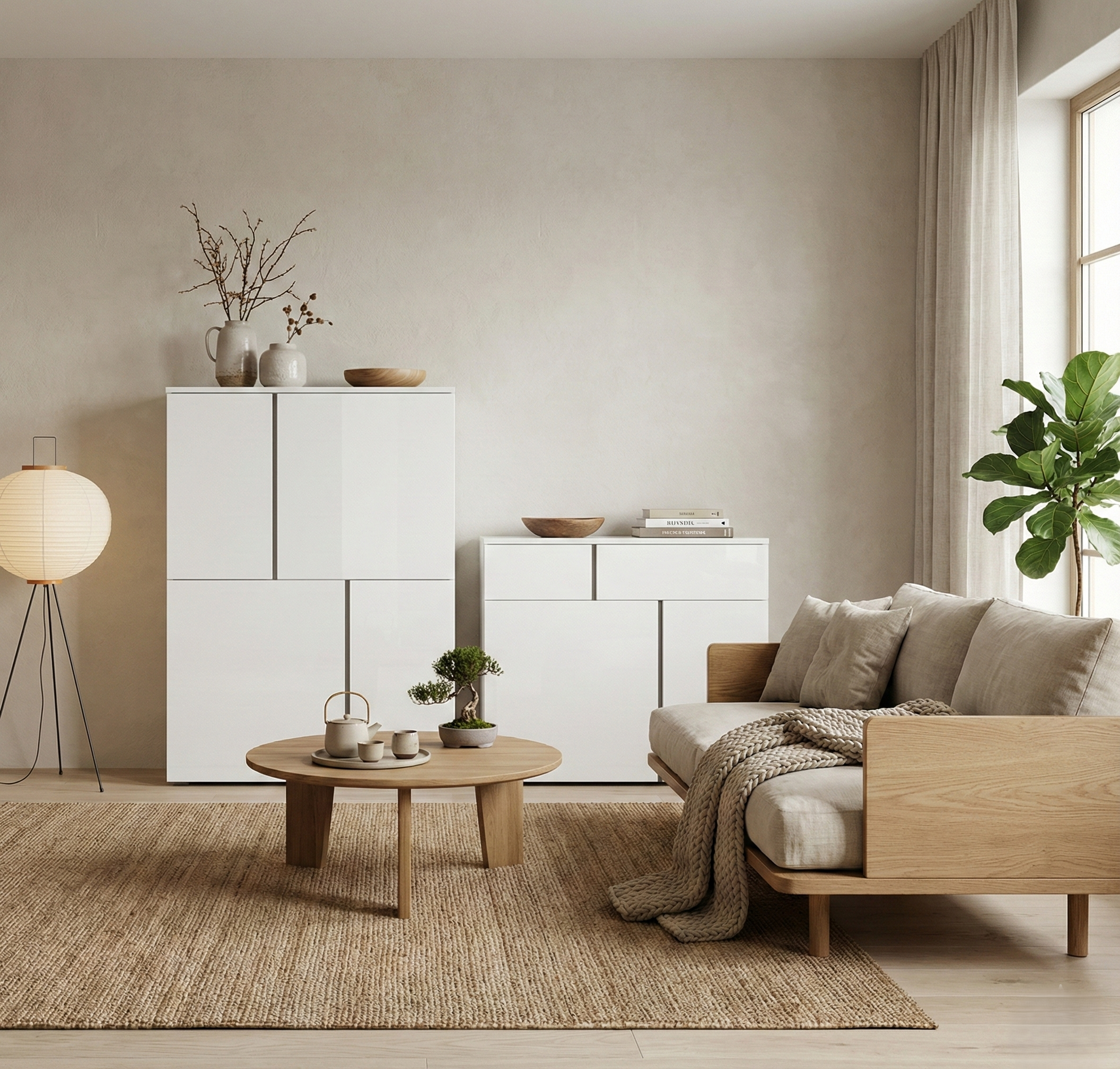
Recognizing a Japandi style interior is intuitive, as it is based on a specific play of colors and forms. The color palette is the foundation of this aesthetic. The base here is typically Scandinavian warm whites, beiges and bleached grays, which, however, are broken by darker earthy accents characteristic of the Japanese style. These interiors are not afraid of deep brown, ochre, bottle green and even black, which often appears in the details, giving the rooms a graphic, expressive character and elegance.
Furnishings also play a key role. The influence of Eastern culture is clearly visible in the height of the furniture. Low beds (often futon type), low coffee tables and sofas with a lowered seat dominate. This treatment not only optically enlarges the space, making ceilings appear higher, but also has a psychological dimension - being closer to the ground promotes a sense of grounding and calm.
The materials used in Japandi's arrangements are an absolute nod to nature. There is no place for plastic or synthetic imitations. Wood reigns supreme, often in darker, more refined shades than in classic Scandinavian style, and is accompanied by stone, bamboo, rattan and raw ceramics. Textiles are mainly natural linen, cotton and wool with distinct weaves, which bring the necessary texture and coziness to the interior. Decorations are sparing - each item has its own place and purpose, and the decoration becomes the very texture of the wall, the sculptural shape of a vase or a single showy plant, such as a Bonsai tree or a stately Ficus.
How to bring Japandi into your interior?
Transforming an interior into Japandi does not have to mean a general overhaul, but rather a change in approach to the space. The process is best started with a radical decluttering, or decluttering. Removing superfluous items from view, tucking cables and trinkets into aesthetically pleasing boxes is the first step to achieving visual tranquility.
It is worth gradually replacing accessories, replacing plastic elements with ceramics, wood or glass. Lighting is extremely important, which should build the mood. Instead of one central chandelier, it is better to bet on several points of light with warm colors, using lamps with paper (referring to lanterns) or woven shades, which softly and moodily diffuse the light.
Remember that in Japandi less is more, but this „less” must be of the highest quality. When choosing a new armchair or table, pay attention to its form and material, treating it as an investment for years to come that will please the eye with its simplicity and functionality every day.
Summary:
Japandi style is a response to the needs of modern man - it combines functionality with zen aesthetics. It is not just a visual trend, but a lifestyle that promotes tranquility and conscious consumption. If you dream of an interior that will become your private oasis of tranquility, choosing this aesthetic will be a hit.